
Ingress Protection (IP) rating is a standard used to indicate the ability of electrical equipment to protect against solid foreign objects and liquids. For indoor and outdoor lighting, this is where the IP rating comes into play. Understanding IP ratings helps businesses select appropriate lighting products based on their usage environment, improving device protection and lifespan.
IEC 60529 defines the degree of protection provided by enclosures against the intrusion of solid objects, dust, accidental contact, and water. IP ratings are represented by a two-digit coding system, such as IP65, which indicates a device's ability to withstand solid objects and moisture. The first number indicates the level of protection against solid objects (such as dust and debris), while the second number indicates the level of protection against humidity (moisture).
The first digit of an IP rating shows the level of protection against dust and other solid objects. This digit spans from 0 to 6, where 0 denotes a complete absence of protection, while 6 signifies the device's comprehensive safeguarding. Below is the IP rating chart for the first digit.
| Rating | Protection |
|---|---|
| X | X indicates that no data exists to assign a protection rating for this criterion. |
| 0 | No protection, leaving the device vulnerable to solid object intrusion. |
| 1 | Effective against objects larger than 50 mm. |
| 2 | Effective against objects larger than 12.5 mm. |
| 3 | Effective against objects larger than 2.5 mm. |
| 4 | Effective against objects larger than 1 mm. |
| 5 | Capable of preventing dust intrusion, though not entirely sealed. |
| 6 | Provides complete dust protection, leaving no room for dust intrusion. |
The second digit indicates how well the device resists water and moisture. This digit spans from 0 to 9, where 0 signifies an absence of protection, while 9 represents an exceptional degree of moisture resistance. Here is the IP rating table for moisture protection.
| Rating | Protection |
|---|---|
| 0 | Lack of protection, leading to vulnerability to moisture infiltration. |
| 1 | Protected against vertically dripping water. |
| 2 | Shields against water dripping from an angle (within 15 degrees). |
| 3 | Guards against rainwater intrusion at angles up to 60° from the vertical. |
| 4 | Effectively repels rain splash and is suitable for typical weather conditions. |
| 5 | Resists intrusion from low-pressure water columns, ideal for cleaning and spraying situations. |
| 6 | Resists high-pressure water columns and is suitable for more demanding cleaning scenarios.. |
| 7 | Permits brief immersion in water but is not intended for deep-water usage. |
| 8 | Sustains long-term immersion in deep water with outstanding water tightness. |
| 9 | Withstands high-temperature, high-pressure water jets, steam cleaning, and other extreme humidity conditions. |
Here are the key considerations for the application of IP65 rating in outdoor lighting:
Devices with an IP65 rating exhibit outstanding waterproof performance, capable of withstanding heavy rain, humidity, and light water spray. This high-level waterproof capability ensures stable operation in various adverse weather conditions, ensuring consistently good illumination in outdoor areas.
The initial digit 6 signifies a device's high resistance to solid objects such as dust and debris. In outdoor environments with airborne dust, IP65-rated devices effectively prevent dust intrusion, maintaining cleanliness and extending the equipment's lifespan.
The initial digit 6 signifies a device's high resistance to solid objects such as dust and debris. In outdoor environments with airborne dust, IP65-rated devices effectively prevent dust intrusion, maintaining cleanliness and extending the equipment's lifespan.
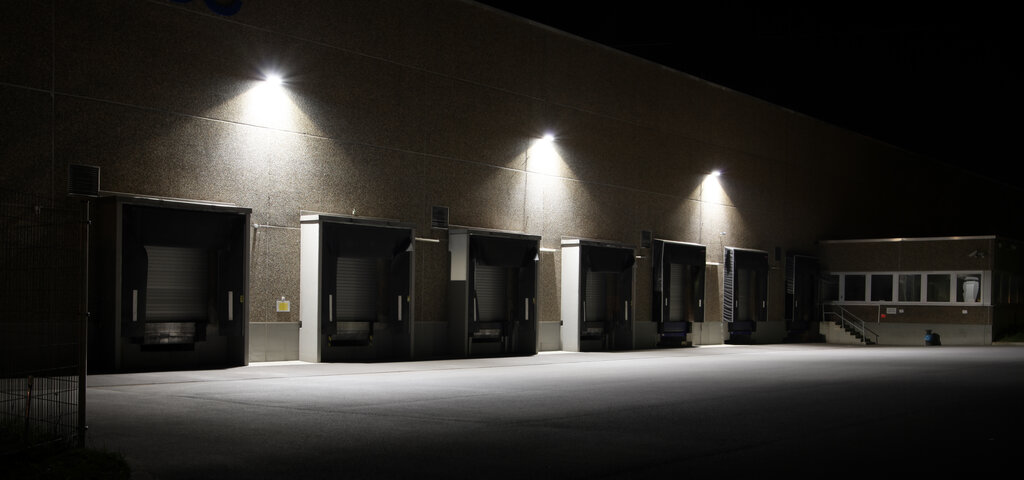
The design of the IP65 rating makes devices suitable for various outdoor scenarios, including extreme weather, high humidity, and different climate conditions. Whether utilized in residential patios, commercial building exteriors, or urban landscape lighting, IP65-rated devices prove versatile, ensuring consistent performance under diverse conditions.
Research published in Scientific Reports found that moisture exposure significantly accelerates LED degradation and shortens service life in outdoor environments. The advanced protection level of IP65 ensures an extended lifespan for devices, reducing maintenance costs. This is crucial for ensuring the long-term reliable operation of outdoor lighting systems, especially in outdoor environments where frequent maintenance may be challenging.
IP65 compliance with international standards, achieved through rigorous testing and certification, guarantees the quality and performance of the devices. This instills confidence in users, ensuring that the chosen equipment will operate stably in various challenging outdoor conditions.
When considering products with IP65, it's essential to grasp your unique requirements and usage environment. Based on these considerations, choose the appropriate IP rating to guarantee stable operation under specific conditions.
Feature: Dust-free, water-free and low-risk indoor normal environment.
Suitable application: Living room, bedroom, office, hallway, shopping mall.
Feature: Slightly damp areas, occasionally exposed to water splashes.
Suitable application: Bathroom ceiling lights, indoor swimming pool changing area lighting, hotel bathroom lighting.
Feature: Areas with high dust levels or a slight risk of getting wet in the rain.
Suitable application: Covered outdoor walkways, underground parking lots, school corridor lighting.
Feature: Long-term outdoor exposure including rain, humidity, and dust; no risk of submersion.
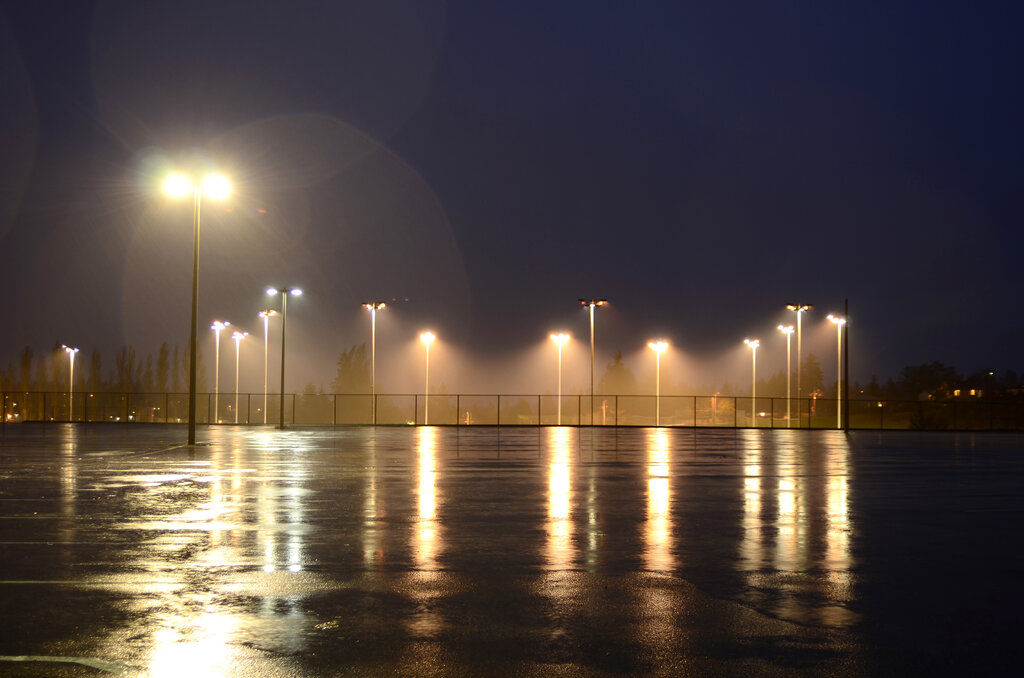
Suitable application: Parking lot, building exterior, warehouse perimeter, stadium, streetlights.
Feature: Harsh outdoor and industrial environments.
Suitable application: Ports, industrial plants, food processing workshops, chemical plants, high-pressure cleaning areas.
Feature: Areas that may be briefly flooded.
Suitable application: In-ground lights, landscape lights, bridge lights
Feature: Areas that are submerged in water for a long time.
Suitable application: Pool, fountain, aquarium.
Although a higher IP rating provides better protection against dust and water, a fully sealed enclosure may reduce heat dissipation. Manufacturers must balance ingress protection and thermal management to maintain LED lifespan.
In both IP65 and IP66, the first number is 6, meaning they have exactly the same dustproof capability, reaching the highest level. The key difference between them lies in the second number, which is waterproof capability.
| Feature | IP65 | IP66 |
|---|---|---|
| Waterproof Rating | 5: Water spray protection | 6: Protected against strong water spray |
| Withstand the Impact of Water Flow | Relatively weak (simulating ordinary rain, splashing water, or low-pressure water gun washing) | Extremely powerful (simulating the spray of a high-pressure water gun) |
| Common Application | Dusty indoor environments, ordinary outdoor streetlights, general industrial workshops, and rainproof surveillance cameras | Docks, decks, outdoor areas susceptible to heavy rain or typhoons, and seafood/food processing plants requiring frequent high-pressure washing |
Neither IP65 nor IP66 can be submerged in water. IP65 meets the needs of most commercial lighting and the cost is also relatively low. If the environment only experiences rain or occasional cleaning, IP65 is sufficient.
IP67 includes all the water and splash protection features of IP65, and additionally has the ability to be submerged in 1 meter of water for a short period of 30 minutes. This is a feature not found in IP65. IP67 is more suitable for environments where water accumulation or immersion may occur, such as underground passages, around landscape pools, low-lying areas, and outdoor in-ground lights.

The LEDVANCE FLOODLIGHT is designed for outdoor area lighting applications, including building facades, signage, parking areas, pathways, and landscape illumination. It features selectable wattage and lumen outputs, color temperature options of 3000K, 4000K, and 5000K, and a CRI above 80 for reliable visual performance. The luminaire delivers efficacy of up to 150 lm/W and is DLC 5.1 Premium listed, helping reduce energy consumption and qualify for utility rebate programs. For outdoor durability, the fixture is rated IP65, helping maintain reliable operation in rain, dust, and other challenging outdoor conditions.

The UltraLED Dual Selectable Vapor Tight series boasts IP66, NEMA4X, and NSF splash zone ratings. Available in 2ft, 4ft, and 8ft versions, these fixtures offer wattage and color temperature selectability, ensuring customization. With features like stainless steel lens clips, DLC 5.1 listing, and optional motion sensors, these fixtures provide energy-efficient and versatile lighting solutions for various environments.
Water-resistant means the product can withstand light exposure to water, such as splashes, light rain, or condensation, but it is not protected against immersion. For example, an IPX4 rating protects against splashing water from any direction.
Waterproof means the product can handle stronger water exposure, often including immersion for a certain depth and duration. For instance, IP67 means it is dust-tight and can be submerged in water up to 1 meter for 30 minutes.
A product is considered dustproof when the first digit in its IP rating is 6. This means it is completely protected against the entry of dust or other solid particles. For example, IP65, IP66, IP67, and IP68 are all dust-tight ratings.
In short, any IP rating starting with 6 is dustproof.
For industrial environments, the best IP rating usually starts at IP65 or higher, since these settings often involve heavy dust, debris, and exposure to water during cleaning or operation. An IP65 rating ensures that equipment is completely dust-tight and resistant to low-pressure water jets, making it suitable for most manufacturing floors and warehouses.
For harsher environments where stronger water exposure or regular washdowns are common, IP66 offers greater protection against powerful water jets. In industries with extreme moisture or the possibility of equipment being submerged, such as food processing or outdoor construction, higher ratings like IP67 or IP68 provide the most reliable defense.
No. IP rating measures the overall protection of the luminaire housing against dust and water, not the performance of the bulb or light source itself. Theoretically, any light source technology can be designed to achieve a high IP rating. However, LEDs are easier to design with high protection ratings.
IP rating testing is conducted in accordance with International Electrotechnical Commission IEC 60529, which verifies the protective capability of the luminaire housing. The testing process simulates real-world environmental conditions, such as exposure to dust, rain, splashing water, or water jets, depending on the protection level being assessed.
This decision not only prolongs equipment lifespan but also reduces maintenance costs, thereby enhancing the overall quality of outdoor lighting. IP65 is one of the most widely used IP ratings due to its strong resistance to dust and water, proving to be ideal for environments subjected to heavy rain, humidity, and water spray.
FOLLOW US ON:


